How Sequential Play Patterns Shape Access to Layered Credit Systems in Portable Gaming Networks
Rosa Fischer · Nov 22, 2026
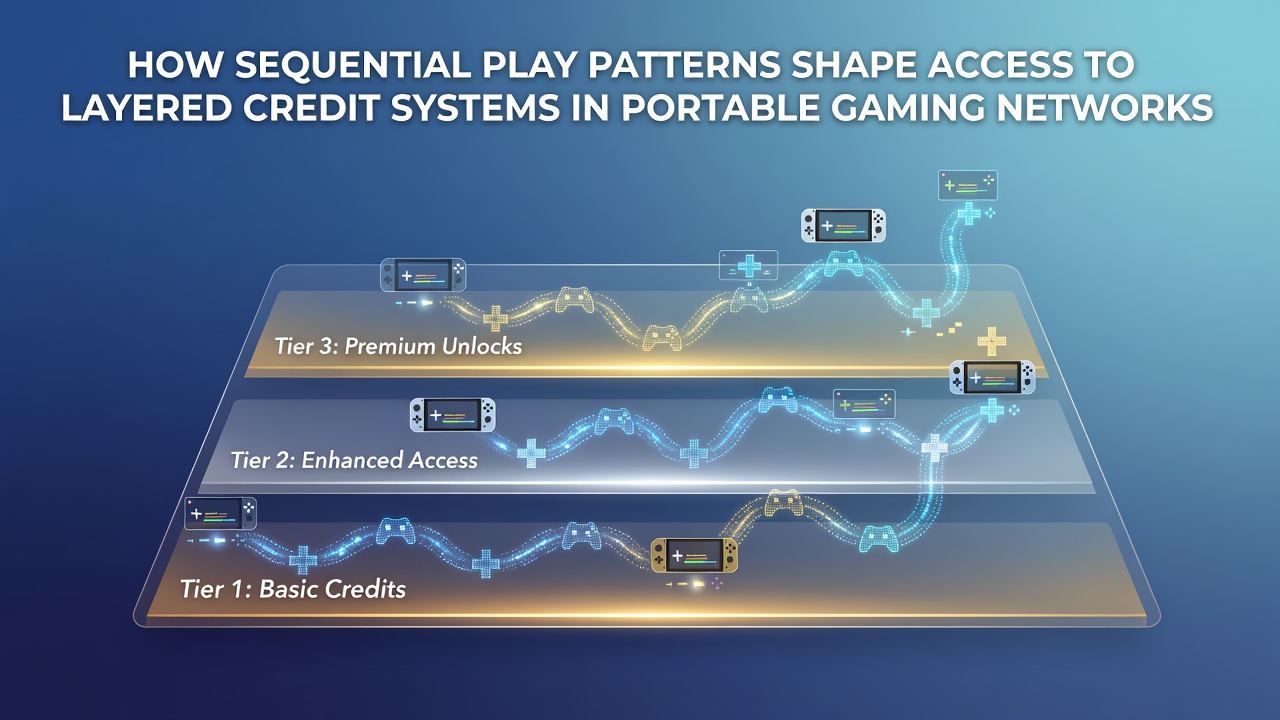
How Sequential Play Patterns Shape Access to Layered Credit Systems in Portable Gaming Networks
Sequential play patterns refer to the ordered sequences of user actions within mobile gaming applications where each session builds directly on prior outcomes and these patterns determine how players unlock successive tiers of credit systems across wireless networks. Data from industry monitoring services shows that engagement sequences lasting beyond fifteen consecutive sessions correlate with elevated access rates to mid-level credit layers in portable formats while shorter fragmented sessions limit progression to base tiers only.
Defining Sequential Play Patterns in Mobile Environments
Researchers tracking user behavior across handheld devices observe that sequential patterns emerge when players complete missions or rounds in consistent order without extended breaks and these sequences trigger algorithmic responses that adjust credit availability in real time. Studies conducted by academic institutions in Australia indicate that patterns involving daily logins over a fourteen-day span increase the probability of entering higher credit strata by thirty-two percent compared to irregular access schedules. Network operators implement tracking protocols that log each action timestamp and sequence completion rate which then feed into decision engines governing credit distribution.
Structure of Layered Credit Systems
Layered credit systems organize player resources into progressive bands where entry to each band requires meeting specific activity thresholds derived from play sequence data. The base layer grants standard credits upon initial registration while subsequent layers unlock through cumulative sequence milestones such as completing ten uninterrupted rounds or maintaining a minimum session frequency. Figures released in November 2026 by Canadian regulatory analysts reveal that portable gaming networks processed over 1.4 billion credit layer transitions during the prior quarter with sequential consistency serving as the primary gating factor.
Access rules vary by network architecture yet commonly incorporate metrics like streak length and pattern repetition frequency and these metrics determine whether a player advances from entry-level credits to premium allocations that support extended play windows. Observers note that systems deployed in European markets frequently tie layer progression to sequence verification steps which require players to execute predefined action chains before credits become usable.
Interaction Between Patterns and Credit Access
Portable gaming networks synchronize play sequence data with credit management modules so that each completed sequence segment updates a player's eligibility profile instantaneously. When sequences align with network-defined benchmarks players gain access to layered credits that carry multiplier effects or extended validity periods and misalignment results in delayed or restricted advancement. A report issued by the Gaming Technologies Association in Singapore highlights that networks utilizing real-time sequence analytics achieved a twenty-eight percent rise in tiered credit utilization rates during the first three quarters of 2026.
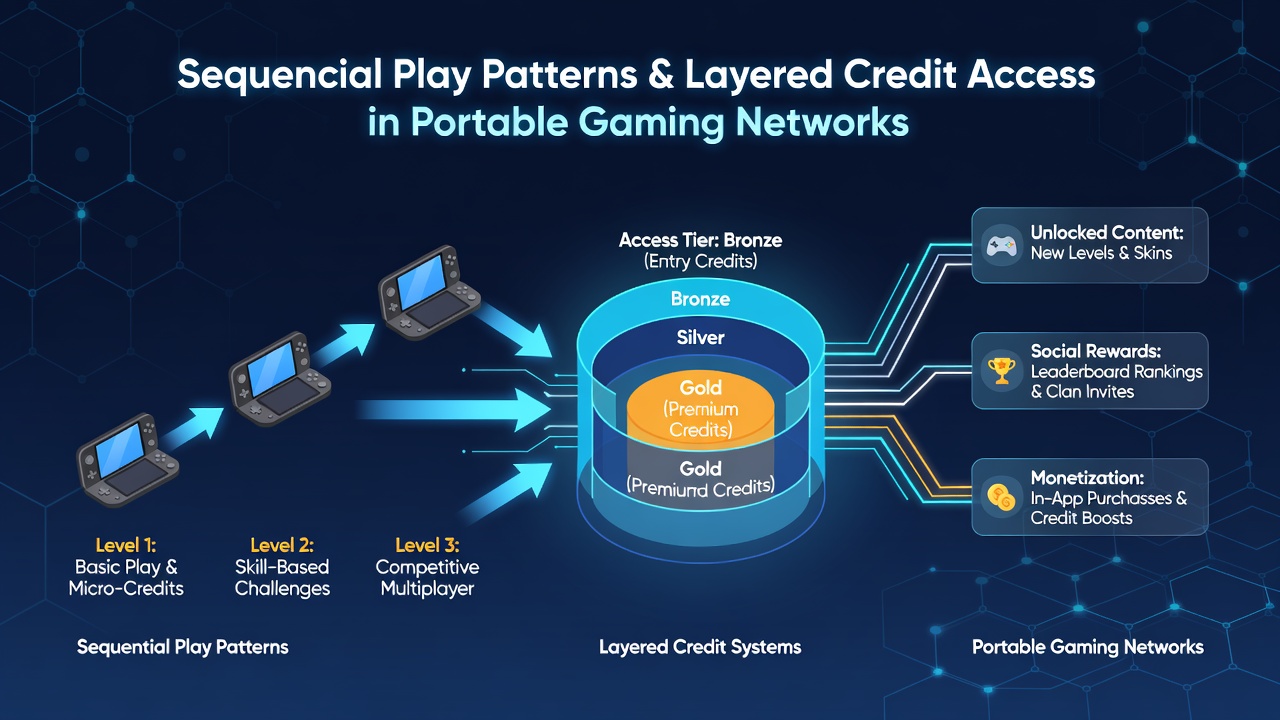
Integration points between sequence tracking and credit layers often occur at session boundaries where the system evaluates cumulative patterns against stored criteria and grants or withholds advancement accordingly. Those who maintain unbroken sequences across multiple device sessions frequently encounter accelerated credit layer releases while fragmented patterns encounter throttling mechanisms that preserve lower-tier access only.
Network Implementation and Data Flow
Wireless gaming platforms transmit sequence logs through encrypted channels to central servers that apply rule sets determining credit layer status and the resulting decisions propagate back to handheld devices within seconds. November 2026 updates to several major network frameworks incorporated enhanced sequence pattern recognition modules that reduced false positive denials of credit access by nineteen percent according to internal performance summaries. These updates rely on machine learning models trained on historical sequence datasets drawn from diverse geographic regions including North American and Asian markets.
Security protocols embedded in the data flow ensure that sequence integrity remains intact during transmission and any detected anomalies trigger temporary holds on credit layer progression until verification completes. Industry reports from the Australasian Gaming Council document that such safeguards maintain system stability while preserving the direct link between sequential behavior and credit tier eligibility.
Conclusion
Sequential play patterns function as the primary mechanism governing entry into layered credit systems within portable gaming networks through continuous monitoring of action order and frequency. Network operators continue refining these linkages based on aggregated performance data collected through 2026 and the resulting architectures maintain clear pathways from base credits to advanced tiers when sequences meet established criteria. The interplay remains a core operational feature across wireless gaming environments worldwide.